
Aslan and C. S. Lewis: Will Hollywood Get Narnia Right?
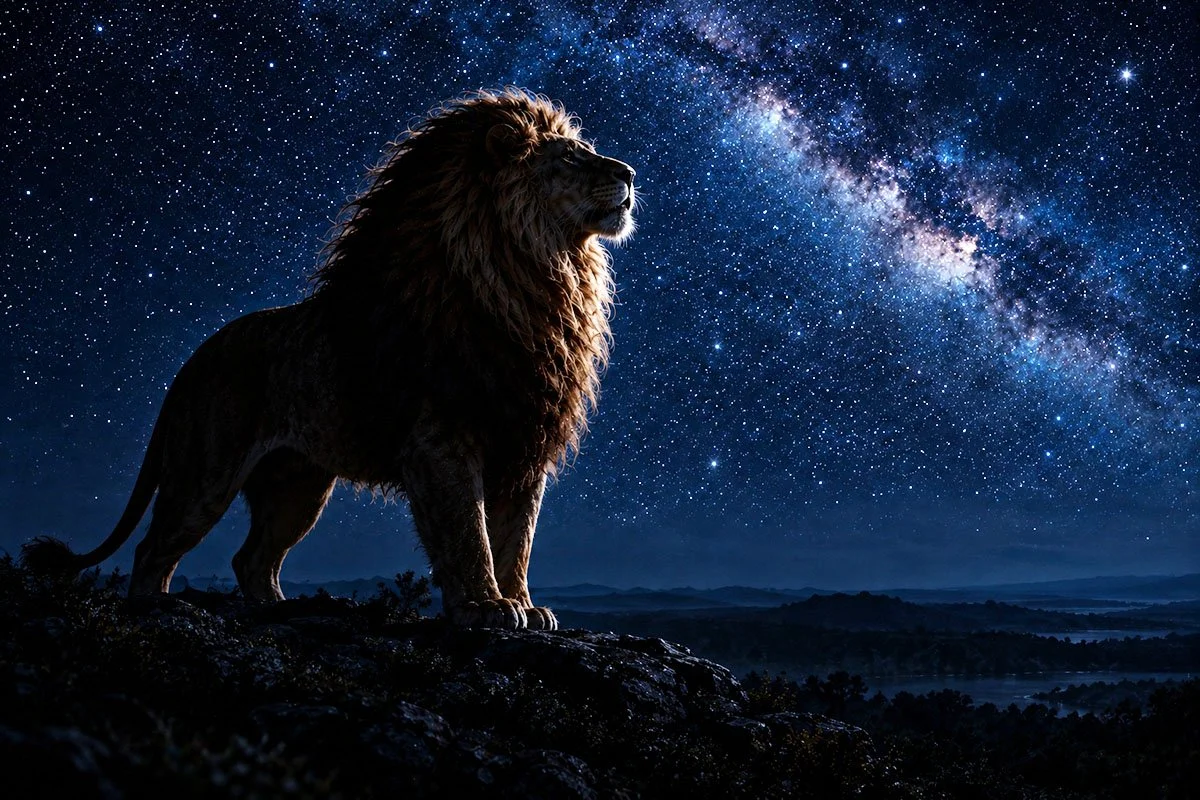
Aslan, the great Lion in C. S. Lewis's The Chronicles of Narnia.
I thought I had finished my Chronicles of Narnia post when I got a frantic text from a dear friend of mine in Pennsylvania. A Netflix production of The Magician’s Nephew is due to come out in February 2027, with Meryl Streep voicing Aslan the Lion. To those who have read the book, Aslan is a male Lion, the Creator and Savior of the land of Narnia. He is not a lioness. So what are we to make of a male lion with the voice of a woman? Even if Meryl Streep is able to make us believe hers is the voice of a male lion—and she is very good with voices—how are we to get that picture of her out of our heads? (Note: One anonymous film insider says he or she has heard the voice, which has been digitally altered to sound masculine—deep and gravelly. But if technology is being used to alter the voice, why start with a feminine voice and let everyone know about it? The story keeps getting stranger as it goes along.)
Being a stalwart fan of C. S. Lewis, I had to look into it. I first watched the trailer, which was not only eye-popping, but ear-tickling—lots of familiar rock music that reminded me of my younger, wilder days. What I didn’t hear, however, was the voice of Aslan, though I did hear “Stairway to Heaven,” just as a huge, cosmic lion appeared that was suddenly transformed into a lion of flesh and blood.
What does the family of C. S. Lewis have to say about what they’ve seen and heard so far? According to two Netflix press releases, both the Lewis family and the C. S. Lewis Company are good with it. The second release was sent out by the family to counter a statement that they were upset about the film. (You can read these two press releases here.) But these statements are based on what? NarniaWeb reports that it contacted the family after both press releases, to which the family replied that they had not yet seen any footage or heard any audio from the movie. That’s odd. How could they be good with it, sight unseen? It appears that it is solely their faith in the director, Greta Gerwig (her last film was Barbie), that leads them to believe the film will be faithful to the book and the intentions of the author.
Which leads to the main purpose of this post—not to address all of the rumors surrounding the film (which are rampant), but to address what it means to be faithful to the book and to the intentions of its author. For those who know the book, being faithful to it centers squarely on the character of Aslan the Lion. If you haven’t read the book—and quite a lot of people haven’t—and are unsure of who Aslan might be, the best person to ask is the author, C. S. Lewis. Fortunately, he answered this question way back in 1958 when a Mrs. Martha B. Hook, who was researching her master’s thesis, wrote him a letter. She was wondering whether The Chronicles of Narnia might be an allegory, to which C. S. Lewis responded, in part:
(Aslan) is an invention giving an imaginary answer to the question, ‘What might Christ become like if there really were a world like Narnia and He chose to be incarnate and die and rise again in that world as He actually has done in ours?’ (The Collected Letters of C. S. Lewis, Volume 3: Narnia, Cambridge, and Joy (1950–1963), edited by Walter Hooper)
Now that’s simple enough. There’s really nothing Lewis needs to say to make it any clearer. And if you’re a screenwriter or a film director or a C. S. Lewis family member looking for the correct characterization of Aslan, the author has made your job very easy. Granted, you’d have to familiarize yourself with the Bible, in case you hadn’t read it, but that would be an essential part of your research work. You’d most certainly conclude that, like the Lion of Judah in the Bible, He is the Lion of Narnia. But if you’re still unsure of yourself, you can read a letter C. S. Lewis wrote about this same Lion to a class of fifth-graders in Maryland back in 1954.
I did not say to myself ‘Let us represent Jesus as He really is in our world by a Lion in Narnia.’ I said ‘Let us suppose that there were a land like Narnia and that the Son of God, as He became a Man in our world, became a Lion there, and then imagine what would have happened.’ (You can read the complete letter for free online through the Internet Archive's digitized copy of C. S. Lewis: Letters to Children. See pages 44-45. It’s also available at Amazon and other places.)
There it is. As my mother used to say, “clear as a bell.” So what is a thinking person supposed to think if the director of The Magician’s Nephew, Greta Gerwig, creates a new lion, one who is not Christ but someone else? Well, The Magician’s Nephew is no longer a tale from The Chronicles of Narnia, but one from The Chronicles of Gerwig. Hopefully, quite hopefully, this will not be the case.
What, then, is the call to action, now that you’ve read all of this? Quite simple. If you intend to see the film, then I am inviting you to read The Magician’s Nephew, either beforehand or afterwards. I’ve just finished rereading it, and it’s even more wonderful the second time around. Then see for yourself. Is the film you just watched of the true Chronicles of Narnia, one that C. S. Lewis would be thrilled to see? Or is it a film in which the lion is not Aslan at all, but an imposter?